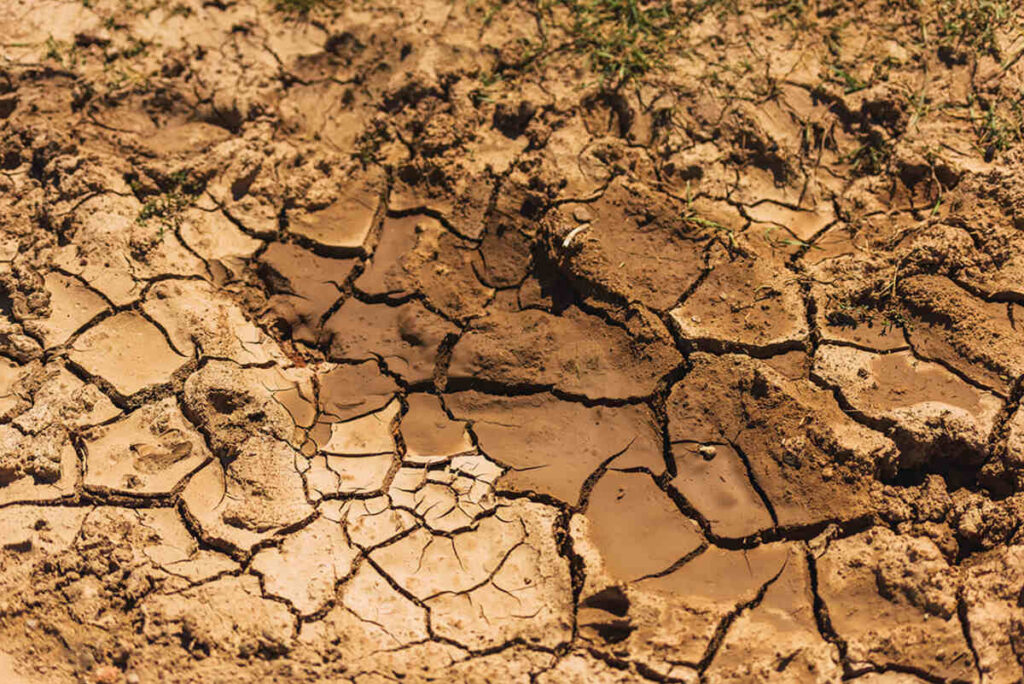
Cracks in the walls? Doors that won’t close? Floors doing things they shouldn’t? The problem might not be your foundation; it might be the soil underneath it.
In Central Texas, expansive clay soil is everywhere. It swells when wet, shrinks when dry, and never stays still. That constant movement puts your foundation through a stress test it didn’t sign up for.
If you want to protect your home, you need to understand what this soil does and what soil or foundation solutions can fix it. Keep reading.
What Is Expansive Clay Soil?
According to ScienceDirect, expansive soils are mostly clays or silty clays that experience significant volume changes when moisture levels fluctuate. Expansive clay is a type of soil that swells when wet and shrinks when dry. Sounds simple, but this back-and-forth movement can shift entire foundations and wreak havoc on homes. It’s common across Central Texas, and it’s one of the top reasons we get called in for foundation problems.
But not all clay soils are created equal. According to a paper from the University of Science and Technology, inorganic clays of high plasticity (with a liquid limit over 50% and a plasticity index above 30) are the most prone to swelling. These properties can be tested in a lab, where soil is soaked and its volume change is measured.
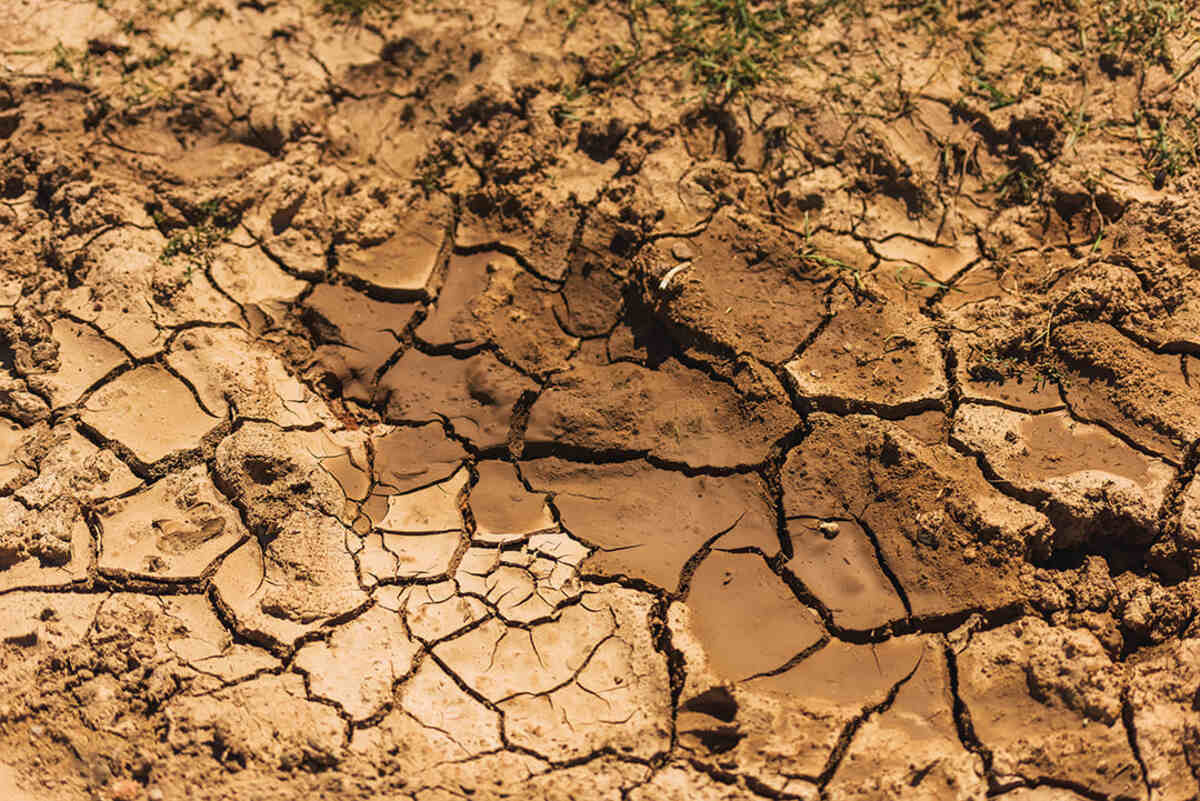
How to spot expansive clay in the real world:
- In dry seasons, you might see deep cracks in the ground, often in rough, polygonal patterns.
- These cracks can go surprisingly deep, sometimes as far as 3 to 40 feet below the surface.
- This moisture fluctuation causes shrink/swell cycles that impact everything above it, especially your home.
How Expansive Clay Soils Damage Foundations
Expansive clay soils are deceptively destructive. At first glance, it’s just dirt. But add water, or take it away, and that soil turns into a force strong enough to crack concrete and shift your home’s foundation.
Why It Matters:
- It expands when soaked, creating powerful upward pressure. In fact, swelling clay can exert forces of up to 5,500 pounds per square foot (PSF), more than enough to lift and damage lightweight structures such as single-family homes.
- It shrinks when dry, pulling away from your foundation and leaving behind air pockets and voids. That’s when parts of your home begin to settle.
- It’s controlled by moisture. Too much? The soil swells and pushes. Too little? It contracts and sinks. That constant moisture cycle creates nonstop ground movement.

Damage To Foundations:
- According to the American Society of Civil Engineers, expansive soils have damaged thousands of homes in places like California.
- 1 in 4 U.S. homes has some form of damage from expansive soils. In fact, it leads to more financial loss than earthquakes, floods, hurricanes, and tornadoes combined. This type of damage usually happens slowly over time and is often mistaken for poor construction.
The clay itself isn’t the villain. It’s the way it reacts to changing moisture, and if you don’t manage that, your foundation ends up doing all the heavy lifting (literally).
How to Deal With Expansive Clay Soil
If your home sits on expansive clay, you’re not out of luck, but you do need to be smart about how you handle it. The key is to reduce how much the soil moves and make sure your foundation isn’t riding the wave every time it rains (or doesn’t).
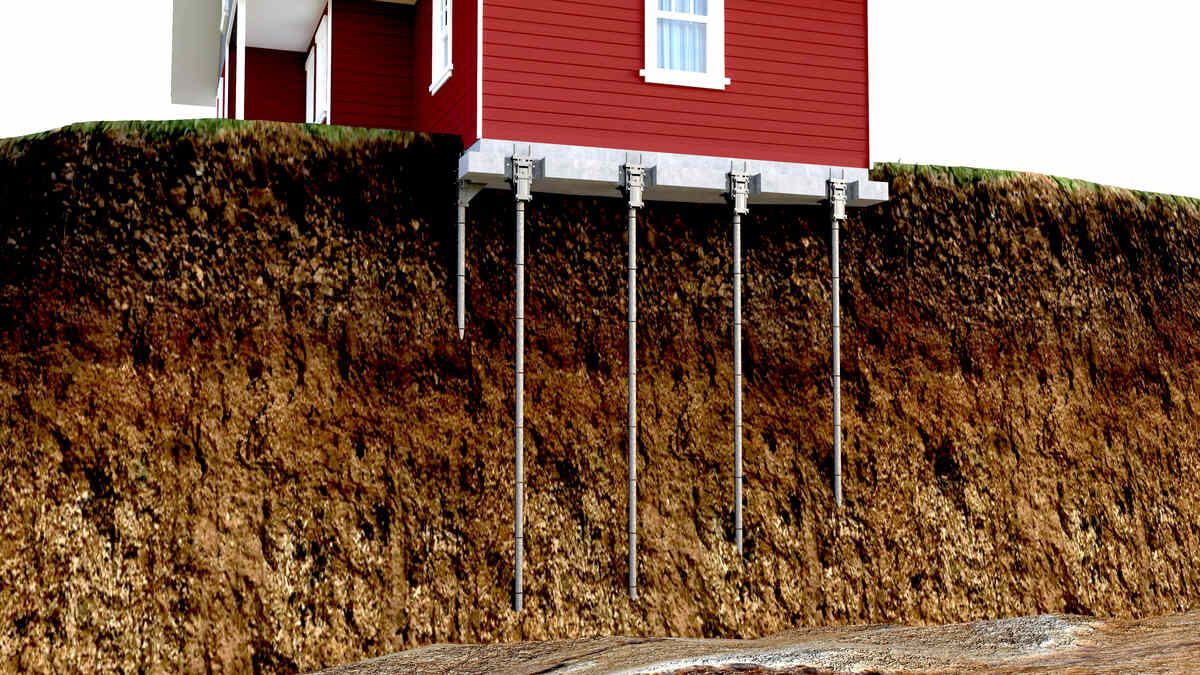
1) Install Deeper Foundation Supports
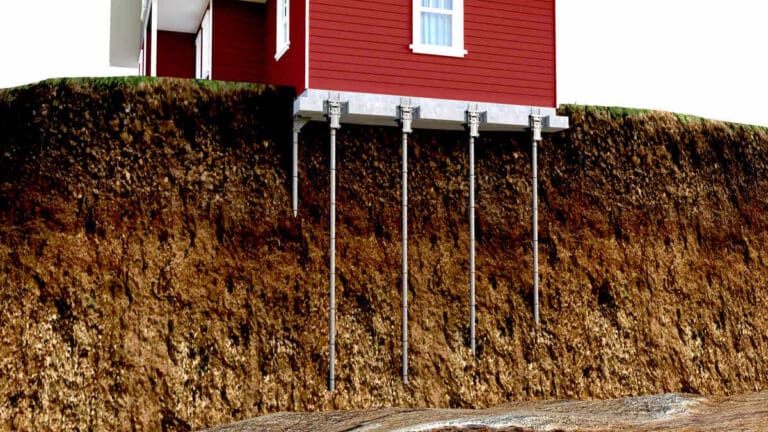
The best way to protect your home is to extend the foundation below the moisture fluctuation zone. That means going deeper, well past where the soil swells and shrinks the most.
- Shallow piers (about 6 feet deep) can withstand typical weather cycles.
- But long-term droughts followed by wet seasons? Those demand deeper piers and stronger systems.
- Deeper piers grip stable soil and resist both upward heave and downward settling.
At Quality Foundation Repair, we install deep steel piers designed to bypass unstable soil and keep your foundation supported for the long haul.
2) Control Where Water Goes
Most of the damage expansive clay causes is due to moisture swings. You can reduce those swings by managing water around your foundation.
- Make sure gutters and downspouts send water away from the home.
- Use French drains or surface drainage systems to prevent pooling.
- Avoid planting water-hungry landscaping near the foundation.
Less water = less swelling. More control = fewer surprises. We install French drains to keep water where it belongs, not under your house.
3) Grade The Yard Properly
It sounds simple, but it’s critical: the ground should slope away from your home on all sides. This helps keep surface water from soaking in near the foundation during rainy months. Poor grading traps water, and trapped water is what triggers soil expansion.
Common Signs of Expansive Clay Soil Damage
Expansive clay doesn’t destroy a foundation overnight; it does it slowly, through subtle signs that often start small and grow worse with time.

Watch For These Red Flags:
- Uneven or sloping floors: Floors that tilt, sag, or feel uneven often mean parts of the foundation are lifting or sinking.
- Cracks in walls, floors, or foundations: Diagonal or stair-step cracks are clear signs that the structure is moving as the soil expands and contracts.
- Sticking doors and windows: When frames shift out of square, doors drag and windows jam, hinting at foundation movement below.
- Pooling water or poor drainage: Standing water around your home feeds the clay’s swelling cycle, accelerating foundation damage.
- Heaving concrete around the property: Driveways, sidewalks, or patios that rise or crack show that the soil underneath is expanding unevenly.
- Foundation upheaval: Parts of the slab push upward when saturated clay expands with pressure strong enough to lift concrete.
- Foundation settling or sinking: During dry spells, shrinking clay leaves space beneath your foundation, causing it to drop unevenly.
Final Word
If your home is built on expansive clay soil, you’re dealing with a powerful force beneath your feet. But you don’t have to lose this fight. With proper diagnosis and targeted soil and foundation stabilization, you can give your foundation the reliable ground it deserves.
At Quality Foundation Repair, we don’t just fix cracks or patch walls. We figure out what’s going on down below, the soil, the moisture, the foundation system, and build a solution that truly lasts.
Ready to get your home off shaky ground? Call us today for an inspection. We’ll dig into what your soil is doing, explain the fix in plain language, and help you make the smart move.