
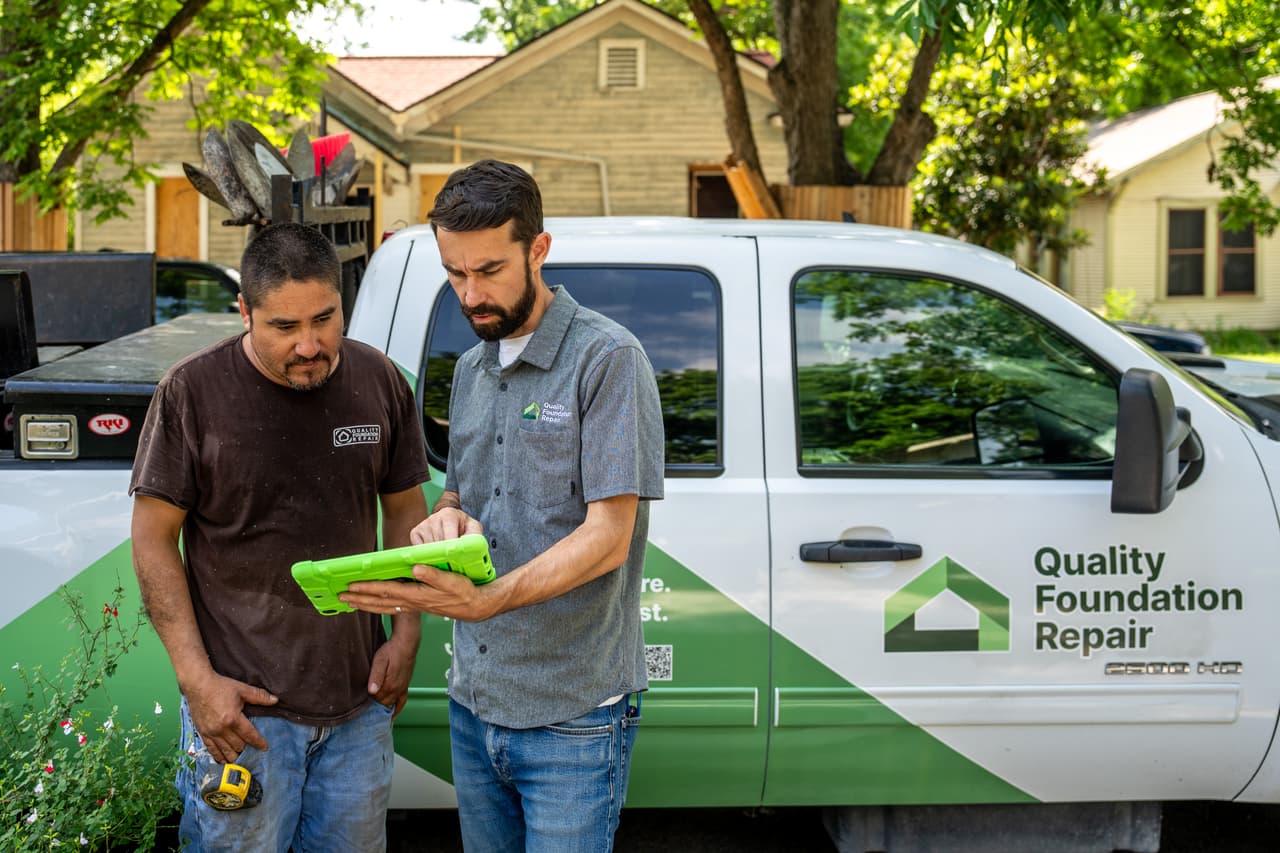
A foundation inspection is a visit where an inspector looks at how your house has moved and works out why. The inspector usually checks cracks, floor level, drainage, and moisture around the home, then reads them together with the type of foundation the house sits on.
The inspection is also where any repair plan starts. It is hard to judge foundation movement from a photo of a single crack. This post explains what the visit usually covers and what you can expect to learn from it.
What Is a Foundation Inspection For?
The main goal of a foundation inspection is to find the cause of the movement. Listing the symptoms is only the first step.
Cracks and sloping floors are usually signs that the soil under the house has changed. An inspector works from what can be seen, inside and outside, toward what may be happening underneath. That way, any repair can address the reason the house moved.
An inspection can also show that no structural work is needed. Some cracks may not be linked to movement that is still going on. That can be a useful answer to have.
What Does a Foundation Inspector Look At?
A foundation inspector usually looks at four things.
- Cracks. Where the cracks are, which way they run, and whether they gather in one part of the house.
- Floor level. How far the floors slope, and in which direction.
- Drainage. How water moves across the lot, where roof water ends up, and whether the ground slopes away from the house.
- Moisture sources. Anything that keeps one patch of soil wetter than the rest, such as a downspout or a leaking pipe.
Each of these can point in more than one direction on its own, so they are read together. A sloping floor, for example, can have more than one cause. Looking at the floor, the foundation, and the drainage together helps the inspector understand what may be happening.
How Do Cracks Help Show Where a Foundation Has Moved?
Where a crack is and which way it runs can often tell an inspector more than how wide it is.
Cracks that gather on one side of a house may suggest that part of the foundation has lost support. Cracks spread evenly through the house may point to a different cause. Cracks above doors and windows are common because those openings are weak points in a wall, so they often show up first when a wall is under strain.
A crack on its own is not a diagnosis. The inspector compares the pattern with the floor level and the drainage before drawing a conclusion. Two patterns homeowners often notice are stair step cracks in brick and doors and windows that stick.
Why Is Drainage Part of a Foundation Inspection?
In Central Texas, drainage is often part of the cause of foundation movement.
Much of the Austin area sits on expansive clay soil. Clay swells when it gets wet and shrinks when it dries, and the shrinking tends to be strongest during dry summers. Foundations usually move when that swelling and shrinking is uneven across a lot. Anything that keeps one area of soil wetter or drier than the soil beside it can be part of the problem. That is why an inspection covers grading, where roof water drains, and any standing water near the house.
It is also why a repair plan that leaves out drainage may be incomplete. If a water source keeps working against the foundation, stabilizing the house does not remove that cause. When the moisture seems to come from plumbing, it can help to know the signs of a slab leak.
How Does Foundation Type Change a Foundation Inspection?
Slab and pier and beam houses are inspected differently. They usually show movement in different ways, and they are repaired with different systems.
On a slab house, the concrete is both the foundation and the floor. The inspector reads movement through the slab and the walls that sit on it. Cracked tile and grout, sloping floors, and cracks above doors and windows are common clues.
A pier and beam house sits on posts and piers above a crawl space. That gives the inspector a structure to look at directly. The inspector can check the support posts, the beams they carry, and the moisture conditions in the crawl space. A damp crawl space can be one reason wood framing starts to sag.
Quality Foundation Repair Austin works on two residential foundation types: slab and pier and beam. When a job needs engineering scans, that work goes through a partner inspection engineer.
Is a Foundation Inspection Free?
For homeowners in the service area, a foundation inspection is usually free. The details, including when a fee applies, are on the foundation inspection page.
Real estate agents are billed for inspections. The free homeowner inspection does not apply to agents.
What Do You Learn at the End of a Foundation Inspection?
By the end of the visit, you can expect to learn what the inspection found, what is likely causing it, and whether a repair is recommended.
When a repair is recommended, the plan names the system for your foundation type. Slab foundations are stabilized with steel push piers that the company manufactures itself. The piers are driven down to soil layers firm enough to carry the weight of the house. You can read more about how push piers work.
Pier and beam houses are stabilized and leveled with Adjust-A-Piers. These piers can be adjusted again later if the ground shifts, so a future correction can be made without replacing them. The pier and beam repair page covers this in more detail.
For either foundation type, the goal is the maximum practical level for that house and its soil. A return to the original grade is not promised. Warranty terms depend on the foundation type and the pressure each pier reaches during installation, and the full conditions are on the warranty page.
What Signs Lead Homeowners to Book a Foundation Inspection?
People often book an inspection after they notice something new in the house. Common examples include floors that feel uneven, new cracks in walls or brick, doors that stop latching, and water that collects near the foundation.
Seeing one of these signs does not always mean the foundation needs repair. An inspection is how you find out what it means for your house. To book one, contact Quality Foundation Repair Austin.