

Foundation Repair Problem Signs in Austin, TX
Early warning signs, wall cracks, uneven floors, sticking doors and windows, and moisture problems, connect to deeper structural issues more often than homeowners expect. Catching them early keeps the fix simple.
Find the Foundation Problem Sign You Are Seeing
Not sure which of the signs below matches your home? Pick where you notice it and what you see, and we will point you to the right page.
Foundation Problem Signs to Watch For
Any one of these is worth a free inspection. Caught early, most foundation problems are far simpler to fix.
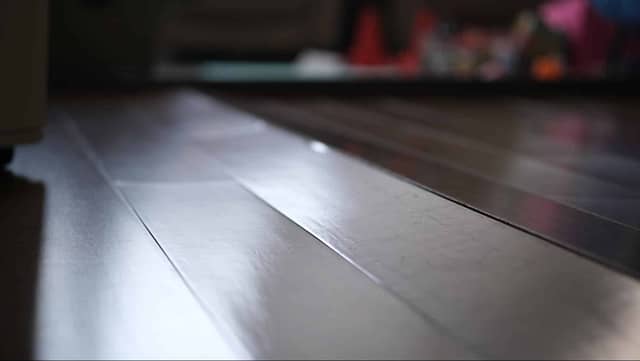
Uneven Floors
Floors that feel sloped, bouncy, or uneven usually point to foundation settlement destabilizing the structure beneath them.
Learn more
Leaning Chimneys
A leaning or tilting chimney is often a sign of foundation shifting or settlement requiring stabilization.
Learn more
Sticking Doors and Windows
Doors and windows that won't open or close properly indicate movement in the foundation causing misalignment.
Learn more
Stair Step Cracks
Cracks in a stair-step pattern along brick or block walls indicate foundation movement, commonly from settlement or soil pressure.
Learn more
Foundation Upheaval
When a foundation rises due to soil expansion or water pressure, it can cause cracks and uneven surfaces.
Learn more
Doors Not Latching
Shifting foundations can misalign doors, preventing them from latching correctly and signaling structural movement.
Learn more
Doors and Windows Misaligned
Misaligned doors and windows are often caused by foundation movement, leading to gaps and alignment issues.
Learn more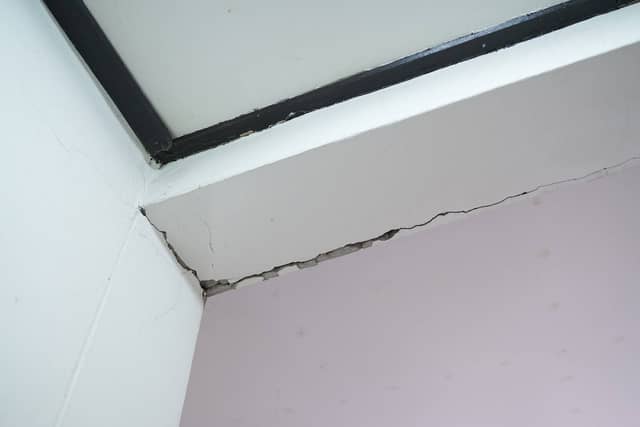
Drywall Cracks
Cracks in drywall, particularly around corners, doors, and windows, are often caused by foundation shifts and settling.
Learn more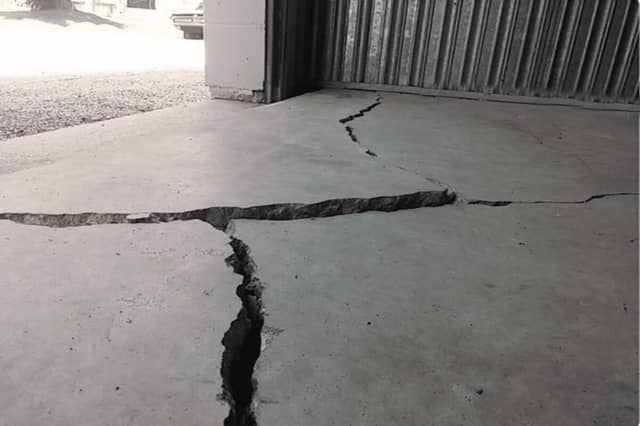
Floor Cracks
Cracks in concrete or tile floors can indicate foundation issues, especially if they appear suddenly or grow over time.
Learn more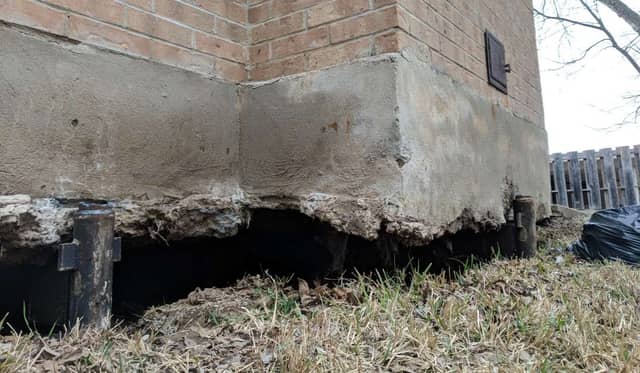
Sinking Foundation
A visibly sinking or settling foundation can lead to structural damage and is a clear sign the foundation needs stabilization.
Learn more
Gaps Around Windows and Doors
Gaps between windows, doors, and walls form when the foundation shifts, creating misalignment that affects the entire structure.
Learn more
Cracked Bricks
Cracks in exterior bricks are a sign of uneven foundation settling and can lead to more serious structural problems if left unchecked.
Learn more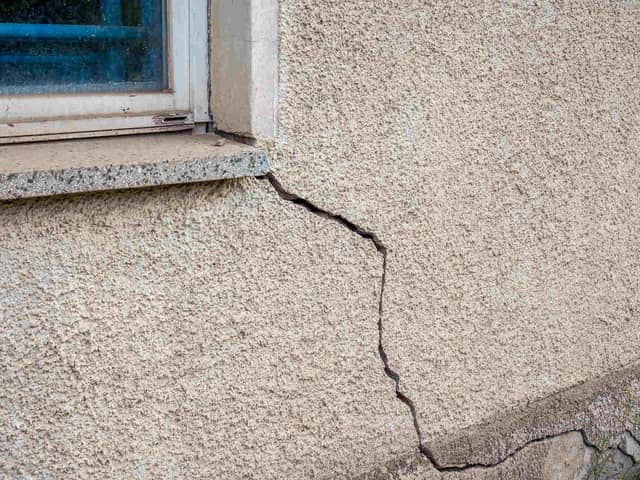
Diagonal Cracks
Diagonal cracks in walls or bricks suggest significant foundation movement and are often linked to pressure on the foundation.
Learn more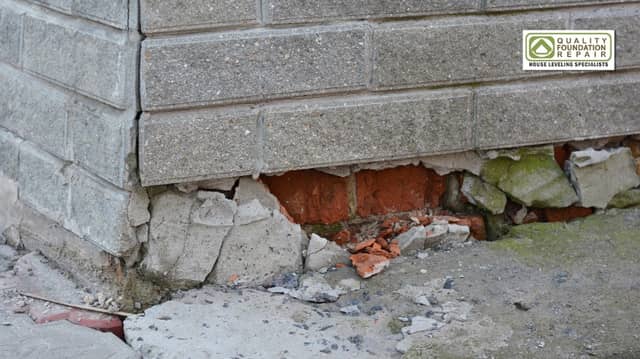
Bowing Walls
Foundation walls that bow inward or outward are a serious sign of soil pressure or movement and can compromise the entire structure.
Learn more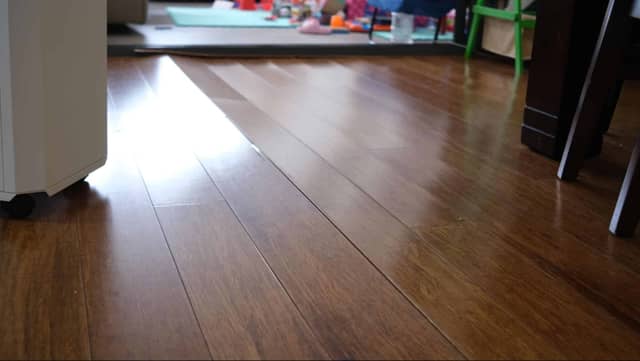
Sagging Floors From Foundation Movement
Floors that droop or sag, especially in the middle, are often caused by foundation settlement or failing support posts in pier and beam homes.
Learn more
Cracks in Door Frames, Ceilings, and Corners
Cracks in these areas are indicative of foundation movement, which causes the structure to shift and crack internally.
Learn more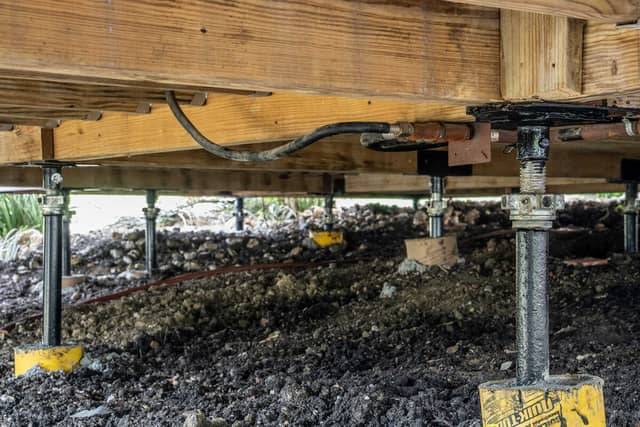
Cracks in Floor Tiles and Grout
Movement in the foundation often causes tiles and grout to crack, indicating that the structure is experiencing settlement or shifting.
Learn more
Bouncing Floors
Floors that feel springy or bouncy when walking across them indicate potential foundation settlement or instability beneath the structure.
Learn more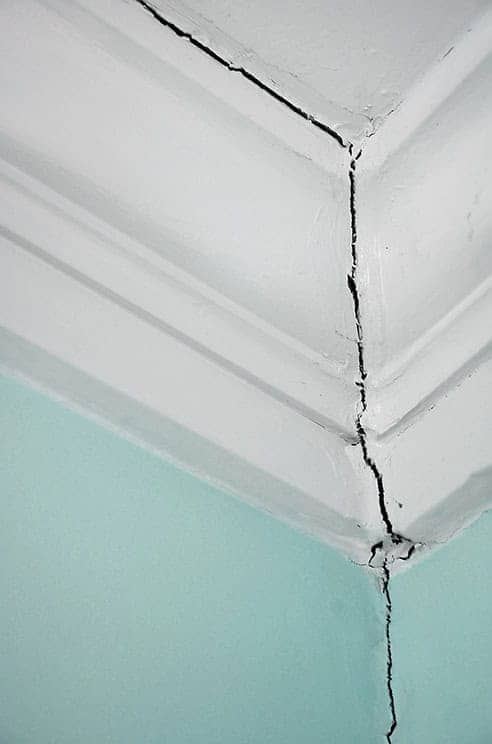
Ceiling Gaps
Gaps that appear between the ceiling and walls often indicate significant foundation movement or structural shifting.
Learn more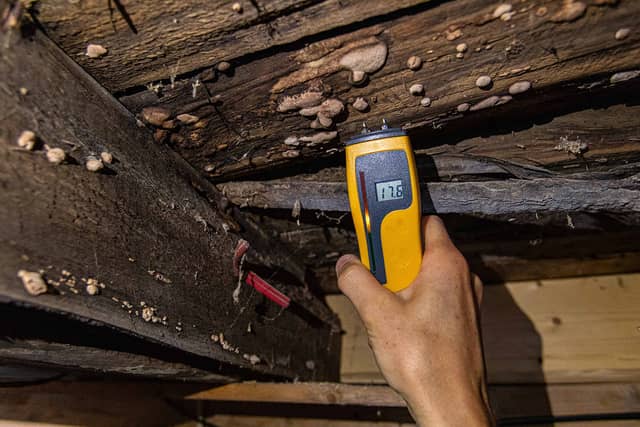
Rotten Wood
High moisture levels, often tied to foundation and drainage issues, can lead to wood rot in crawl spaces, which weakens structural support over time. A foundation inspection helps identify the moisture source.
Learn more
Carpenter Ant Infestation
Carpenter ants are attracted to moist or decaying wood, which is often found around homes with drainage or foundation-related moisture issues.
Learn more
Termite Infestation
Termites can cause structural wood damage that compounds existing foundation issues. If you're seeing termite activity, a foundation inspection can confirm whether structural repair is also needed.
Learn more
Improper Drainage
Poor drainage around the foundation allows water to pool, destabilizing the soil and causing foundation problems. Foundation repair without addressing drainage is treated as incomplete.
Learn more
Cracked Block Foundation
Stair-step or vertical cracks in block foundations are major indicators of foundation problems, often caused by settlement or pressure from the soil.
Learn more
Drywall Nail Pops
Nail heads pushing through drywall may indicate subtle foundation movement or settlement shifting the framing.
Learn more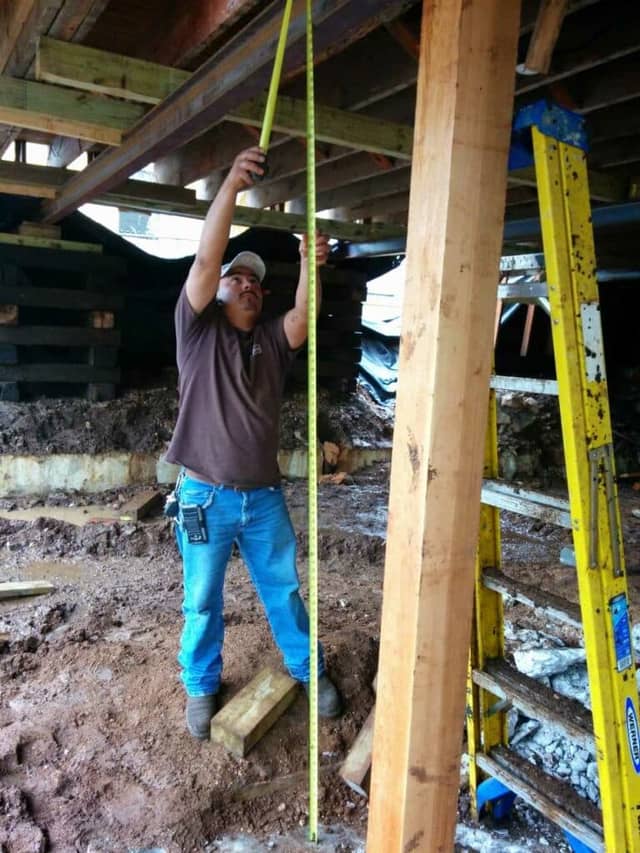
Sagging Lintel Above Garage Door
A sagging garage lintel poses risks to the garage's structural safety and can stem from aging, poor construction, or settlement nearby.
Learn more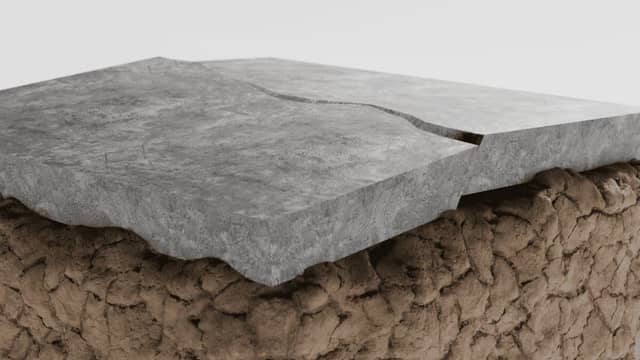
Expansive Soil
Central Texas's expansive clay soil swells when wet and shrinks when dry, the number-one cause of foundation movement in the area. It's predictable, and it's fixable.
Learn moreWhat Foundation Problem Signs Tell Us
Every sign on this page has the same short list of possible causes underneath it. Which one it is depends on your home.
Is It Cosmetic, or Is the Foundation Moving?
One crack on its own rarely answers that. What answers it is the pattern: where the cracking runs, whether doors, windows and floors moved at the same time, how water drains around the house, and whether any of it has changed over the past few seasons. Sorting that out is what the free inspection is for.
When These Signs Tend to Show Up
Austin's Blackland clay shrinks through a dry summer and swells again once heavy rain returns, so signs often surface late in a drought or in the weeks after the weather breaks. A sign that comes and goes with the seasons is still worth a look.
What Happens When You Book an Inspection
We walk the home and check floors, walls, doors, windows and drainage, record what we find with photos and measurements, and send a written report in plain language. If repair is needed, you get a written, fixed price quote. If we find nothing that needs repair, we tell you that too.
Every Foundation Problem Sign We Cover
Grouped by where you would notice it first.
Cracks in Walls, Ceilings and Floors 10
Doors and Windows 4
Floors That Moved 3
Movement in the Structure 5
Soil and Drainage 2
Wood Damage and Pests 3
Why Foundation Problem Signs Show Up on Central Texas Clay
Austin's expansive Blackland clay shrinks in dry summers and swells after rain, cycling in volume with every wet and dry season. Homes built on this clay can experience ongoing movement as the soil expands and contracts. Where that movement shows up depends on the home and foundation type.
"It's the diagonal cracks in the brick and the mortar stair steps that really say that there's a serious foundation issue."
 Simon Wallace
Why Homeowners Choose QFR
Frequently Asked Questions
Areas We Serve
Proudly serving homeowners across Central Texas.
Service Areas (all 54 cities)4.9 Across 616 Reviews
Central Texas homeowners rate us on Google. Here's what backs that rating up.
Get Your Free Estimate
Tell us what you're seeing. An Austin specialist will reach out to schedule your on-site inspection.
- Free, thorough on-site inspection
- Clear written plan and upfront price
- Insured, with a written warranty on pier repairs
Thanks!
Your free estimate request is in. We'll reach out to schedule your inspection.
Prefer to talk now? Call usSomething Went Wrong
We couldn't send your request. Please call us instead, we're glad to help.
Call (737) 260-7340
Get a Free Foundation Repair Estimate
Book a free, no-pressure inspection with an Austin specialist.